

Tumbling
Tumbling is a metal finishing process used to deburr, smooth, and refine fabricated parts by removing sharp edges, burrs, and surface imperfections. It is commonly applied to improve part safety, appearance, and consistency while maintaining dimensional integrity.
How It Works
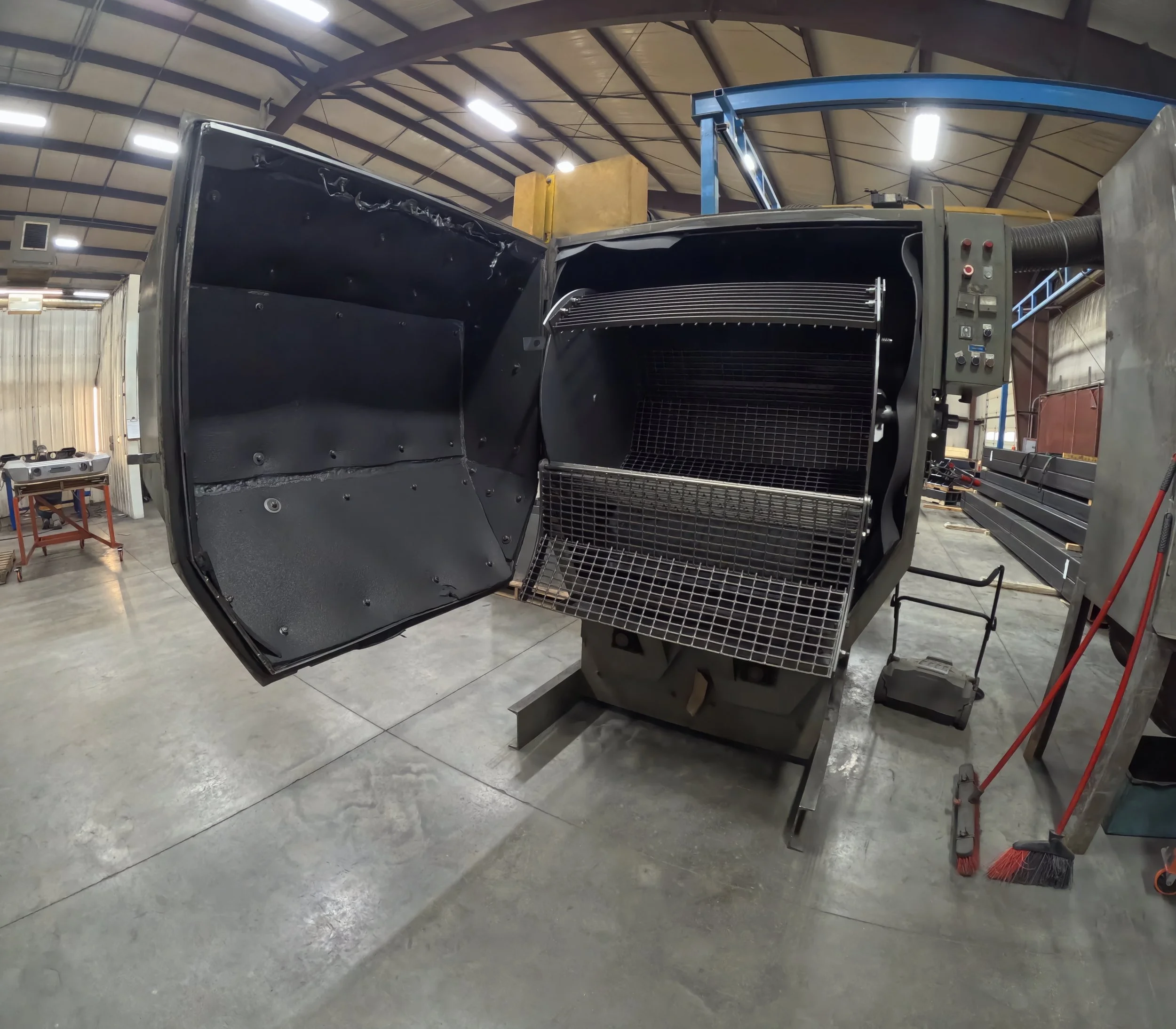
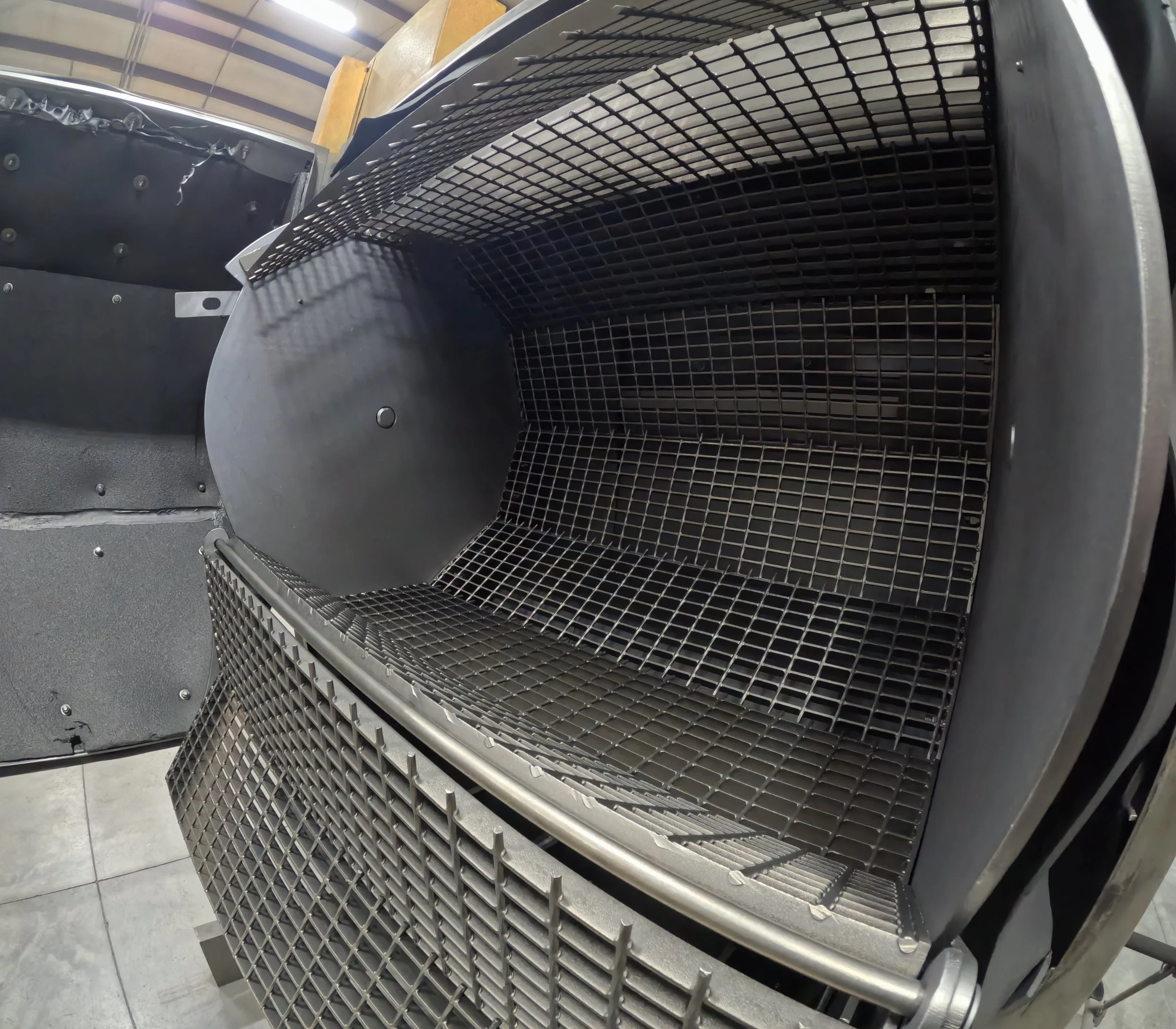
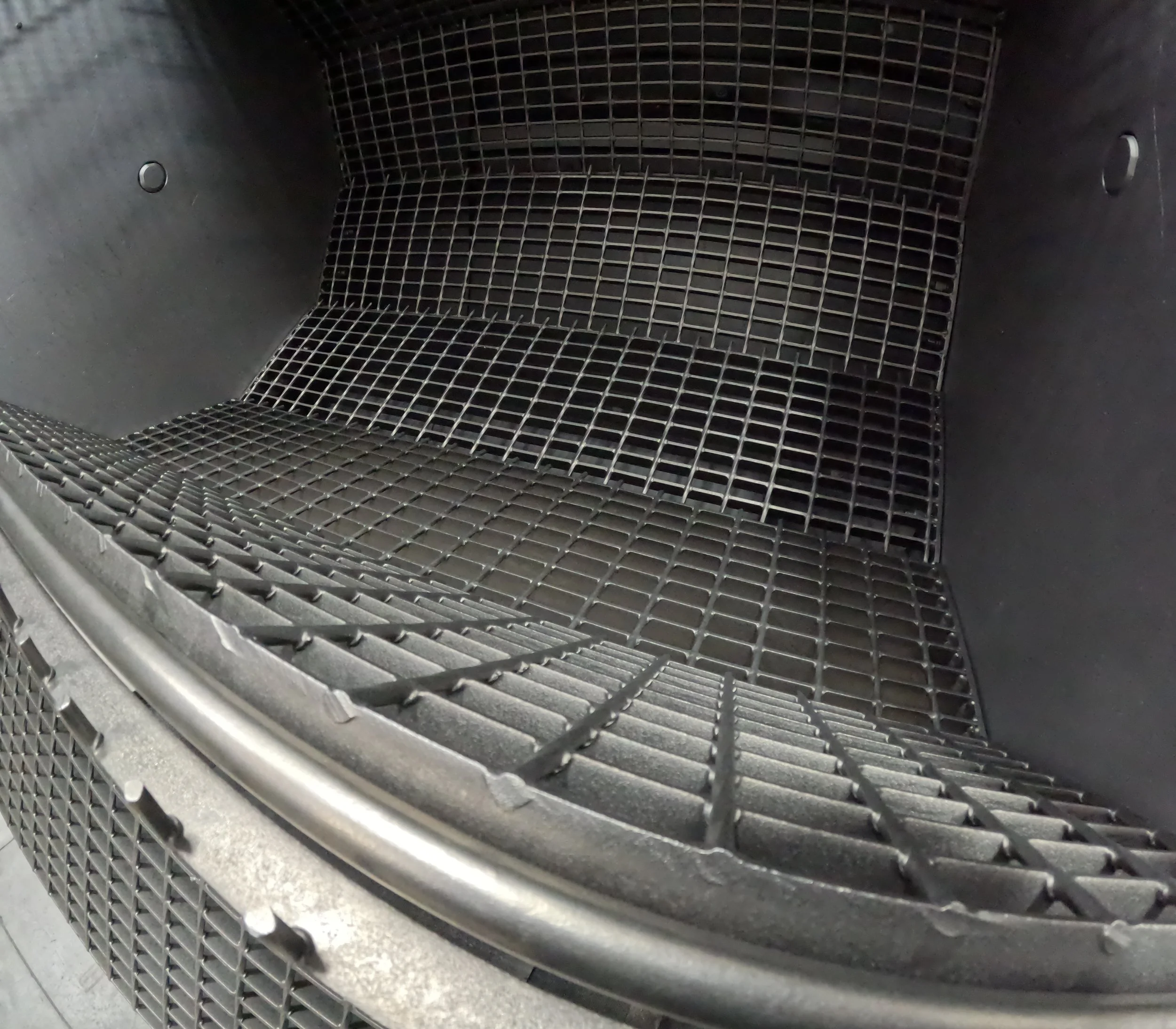
The tumbling process places parts into a rotating or vibrating chamber along with abrasive media selected for the material and desired finish. As the chamber moves, parts gently contact the media and each other, creating controlled abrasion across all exposed surfaces. Cycle time, media type, and motion are carefully controlled to achieve uniform results without damaging part geometry. This process allows multiple parts to be finished simultaneously, making it highly efficient for batch production.
Quality & Accuracy
Tumbling produces consistent edge radii and uniform surface finishes across all parts in a batch. Because material removal is gradual and evenly distributed, the process maintains dimensional accuracy and minimizes the risk of distortion. Careful process control ensures repeatable results from run to run.
Benefits
Tumbling improves part fit, safety, and appearance by eliminating sharp edges and rough surfaces. It reduces the need for manual finishing, lowers labor costs, and increases throughput. Suitable for steel, stainless steel, aluminum, and other metals, tumbling supports both prototype and production fabrication. This process delivers reliable, consistent finishes that prepare parts for coating, assembly, or final use.
TUMBLING