
TUBE BENDING
Tube Bending
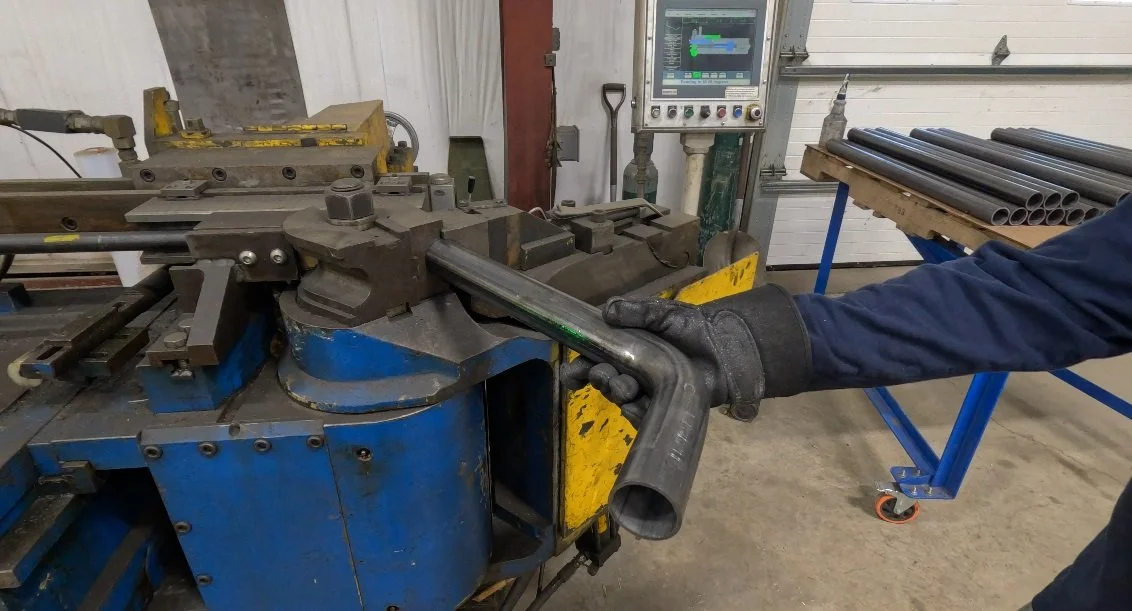
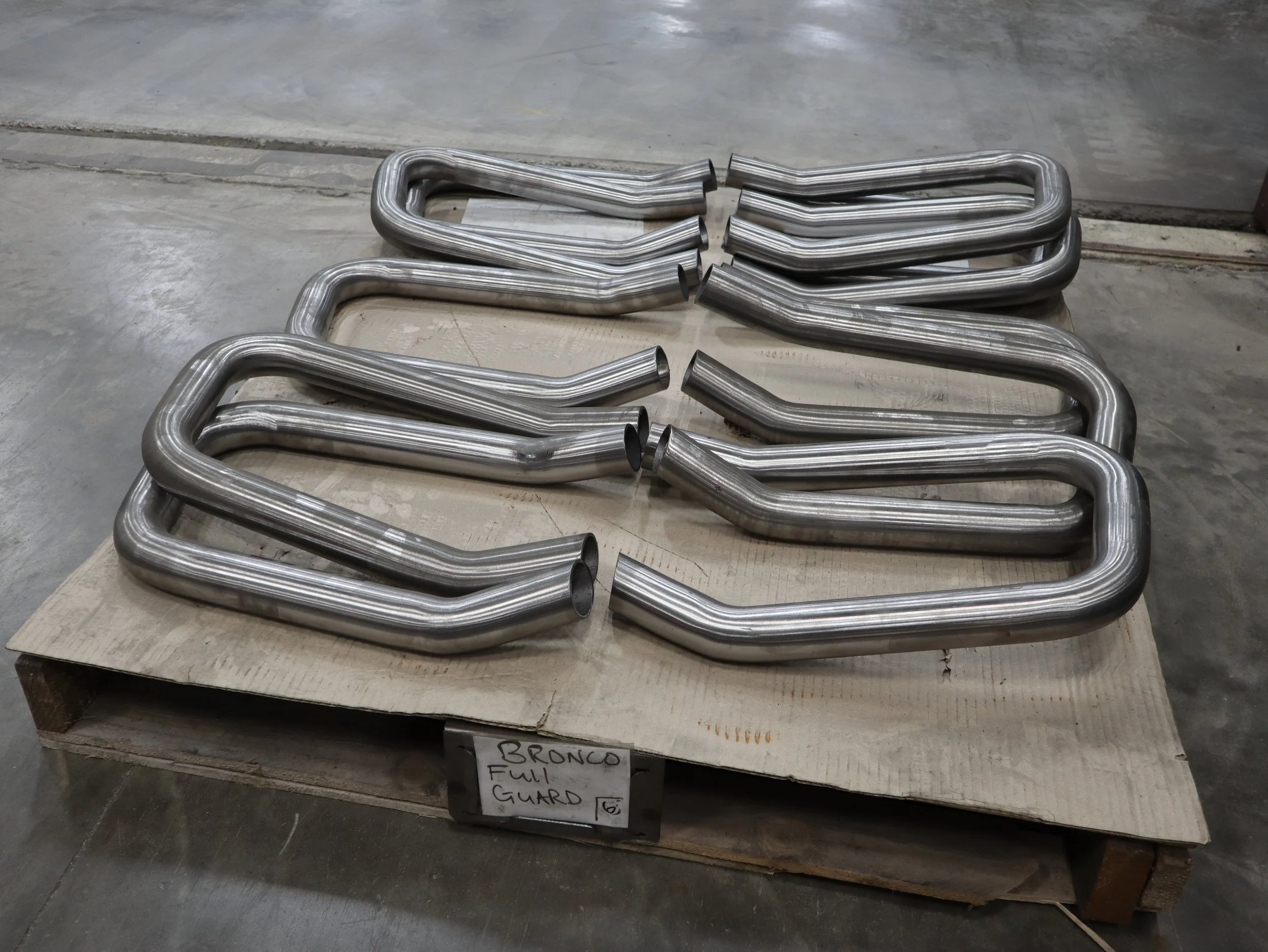
Tube bending is a metal fabrication process used to shape round, square, and rectangular tubing into precise angles and smooth curves without cutting or welding. This process allows components to be formed as single, continuous pieces, improving strength, appearance, and dimensional consistency.
How It Works
The tube bending process begins with straight tubing that is securely positioned in dedicated bending equipment with properly sized tooling. Controlled force is applied to bend the tube to the specified radius and angle. Support tooling is used to maintain the tube’s cross-sectional shape during bending, helping to prevent flattening, wrinkling, or distortion. Careful setup, material selection, and bend sequencing ensure the tube meets design requirements while accounting for material properties such as wall thickness and bend radius.
Quality & Accuracy
Tube bending produces consistent radii, accurate angles, and repeatable results across production runs. Proper process control helps maintain dimensional accuracy and smooth transitions between bends. By forming the tube rather than joining multiple pieces, the process minimizes variation and enhances overall part integrity.
Benefits
Tube bending reduces the need for additional components and welded joints, resulting in stronger, cleaner, and more efficient designs. It supports both simple and complex part geometries and is suitable for steel, stainless steel, aluminum, and other alloys. Tube bending improves structural performance, reduces fabrication time, and delivers high-quality components that meet functional and aesthetic requirements.