
SAW CUTTING
Saw Cutting
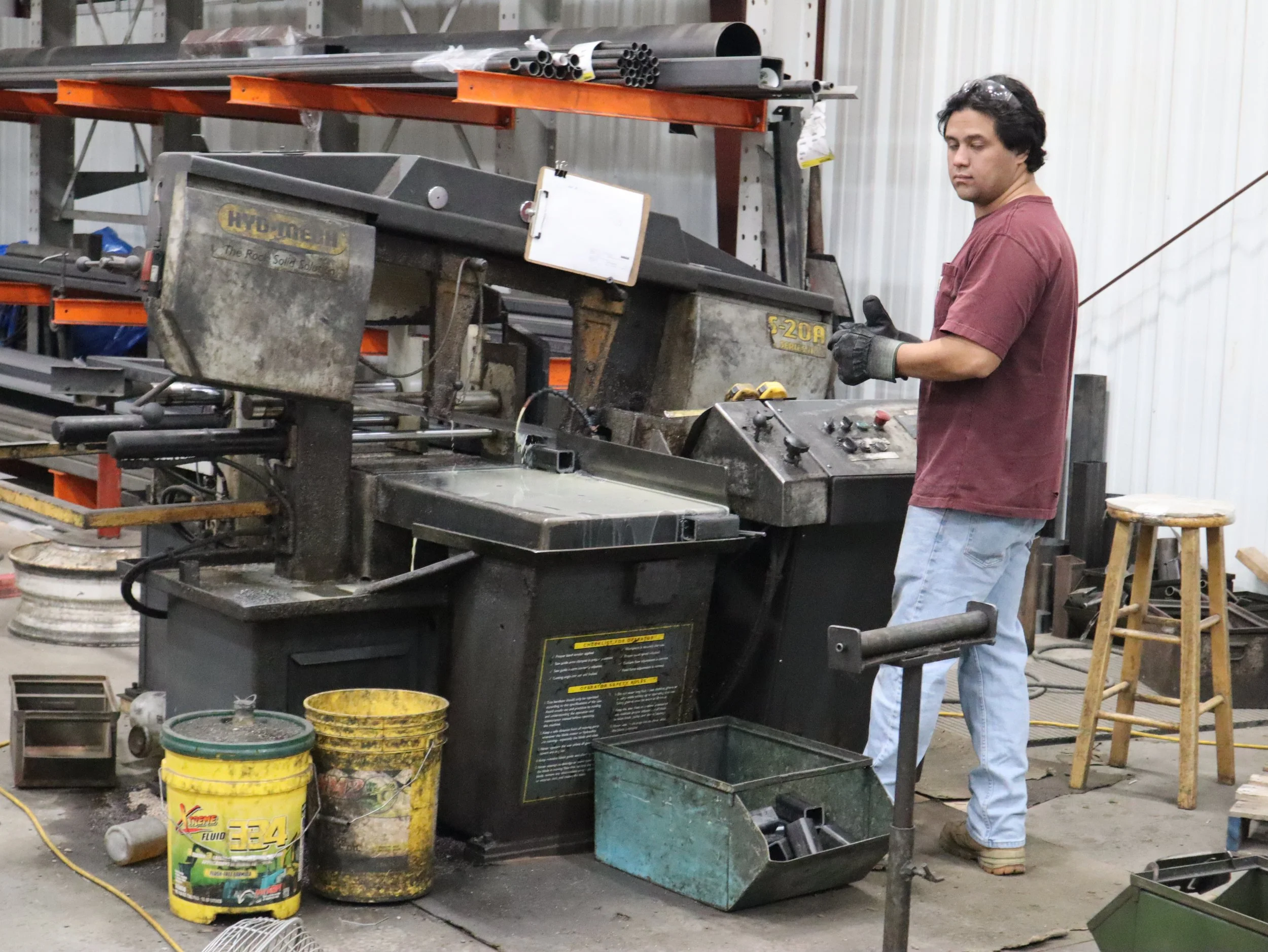
Saw cutting is a foundational metal fabrication process used to accurately cut raw material to length in preparation for downstream manufacturing operations. It is commonly applied to bar stock, tubing, pipe, and structural shapes where precise, repeatable cuts are required to maintain dimensional control throughout the fabrication process.
How It Works
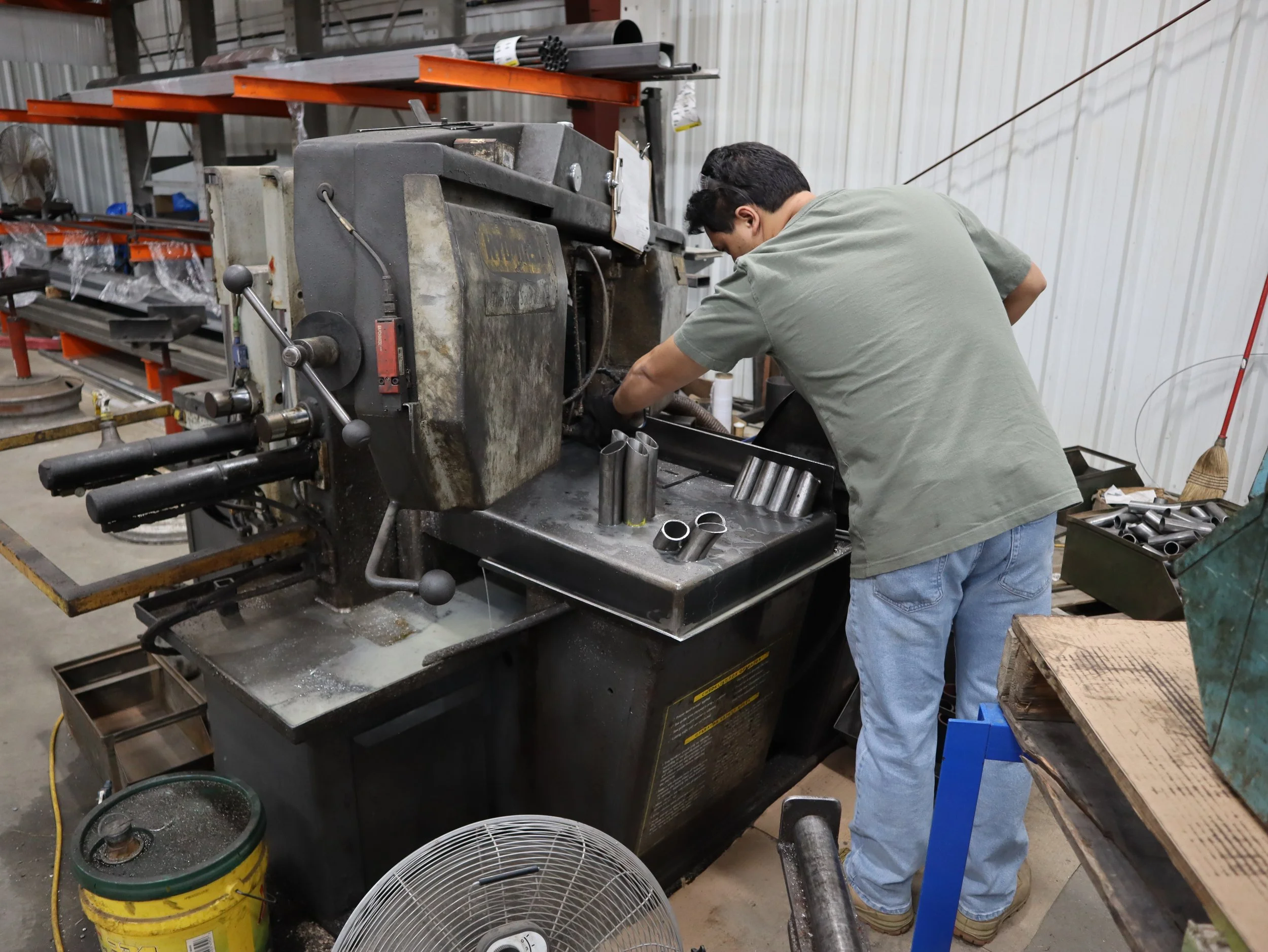
The saw cutting process begins by securely clamping the material to prevent movement during cutting. Using precision-controlled saws equipped with toothed blades designed for specific materials, the saw advances through the metal at controlled speeds and feed rates. Proper blade selection, cutting speed, and coolant application help ensure clean cuts and extend blade life. This controlled approach allows straight, square cuts to be produced consistently across a wide range of material sizes, thicknesses, and profiles.
Quality & Accuracy
Saw cutting delivers reliable length accuracy and square cut faces, providing consistent material preparation for machining, welding, forming, or assembly. Careful setup and process control minimize burrs, deformation, and material waste. The repeatable nature of saw cutting ensures uniform results across production runs, supporting tight tolerances and efficient downstream processing.
Benefits
Saw cutting is an efficient and cost-effective method for preparing metal components while maintaining high accuracy and material integrity. It reduces scrap, improves workflow efficiency, and supports predictable production schedules. Suitable for steel, stainless steel, aluminum, and other alloys, saw cutting is essential for both prototype and production environments, providing dependable material preparation that contributes to overall part quality and manufacturing efficiency.