

PUNCHING
Punching
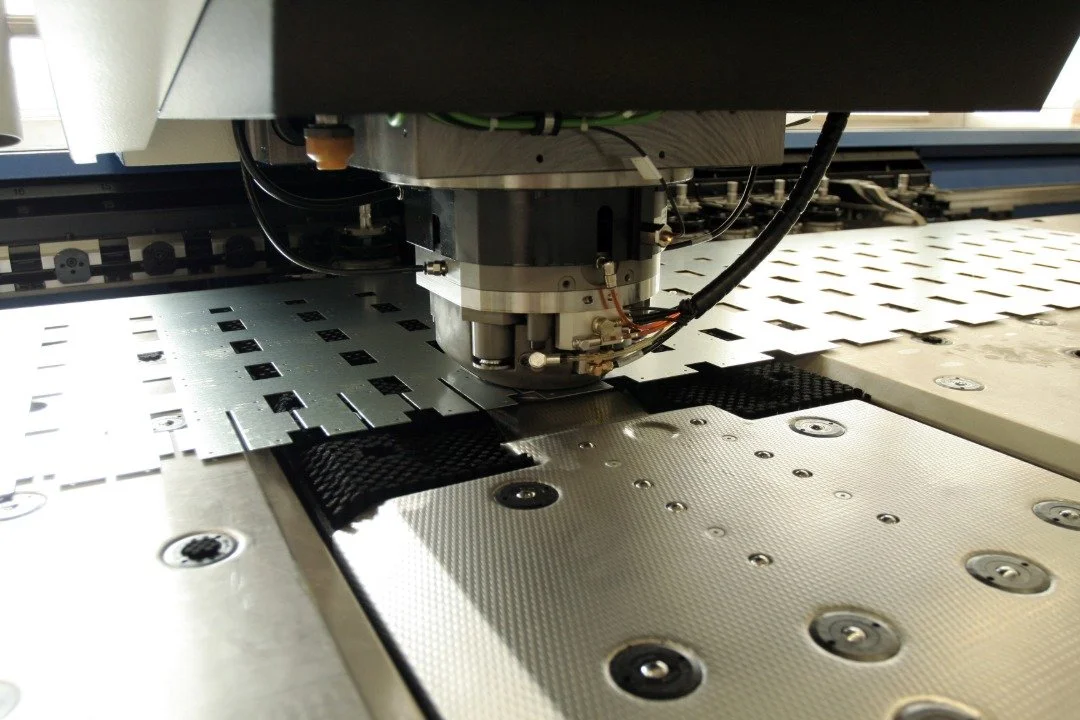
Precision punching is a high-efficiency metal fabrication process used to create holes, cutouts, and formed features in sheet metal with speed, accuracy, and repeatability. It is well suited for parts that require consistent feature placement, tight tolerances, and high production volumes.
How It Works
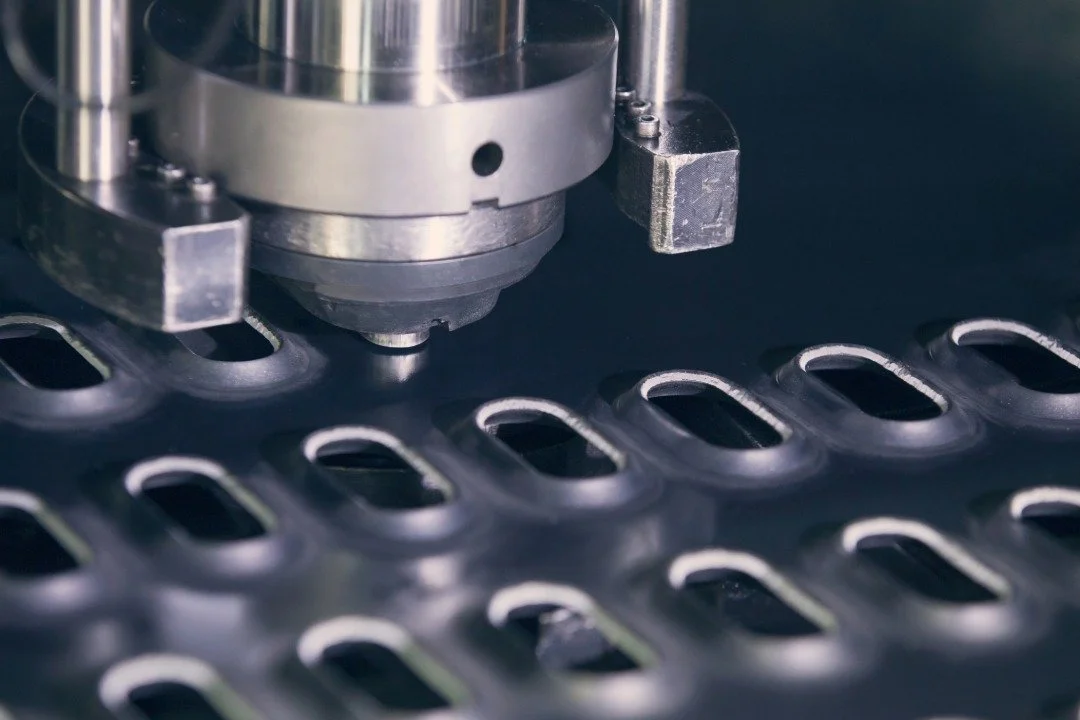
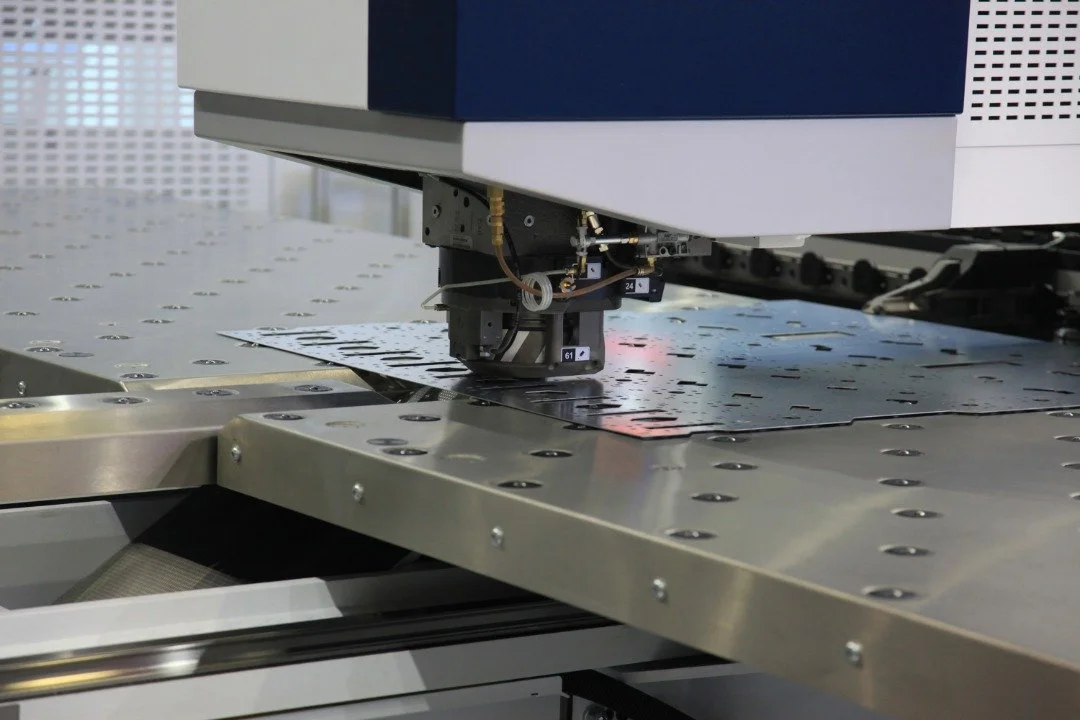
Punching begins with a digital part layout developed from CAD data. Sheet metal is positioned in a punch press, where specialized tooling applies controlled force to shear material and create precise holes or shapes. Depending on the design, multiple features can be produced in a single setup, including louvers, embosses, knockouts, and countersinks. The process allows rapid movement between punch locations, making it highly efficient for patterned parts and repeated features.
Quality & Accuracy
Precision punching delivers consistent results with uniform hole sizes, clean edges, and accurate feature placement. Proper tooling selection and process control help maintain tight tolerances while minimizing material distortion. The repeatable nature of punching ensures reliable part quality across short runs and large production volumes, reducing variation and rework.
Benefits
Punching offers excellent productivity and cost efficiency, especially for medium- to high-volume production. It reduces cycle time, limits material waste, and supports integrated forming operations that eliminate secondary processes. Precision punching is commonly used for steel, stainless steel, aluminum, and other sheet metals and supports both simple and complex part designs. This process provides a dependable, scalable solution for producing high-quality components that meet functional and dimensional requirements.