

PLATING
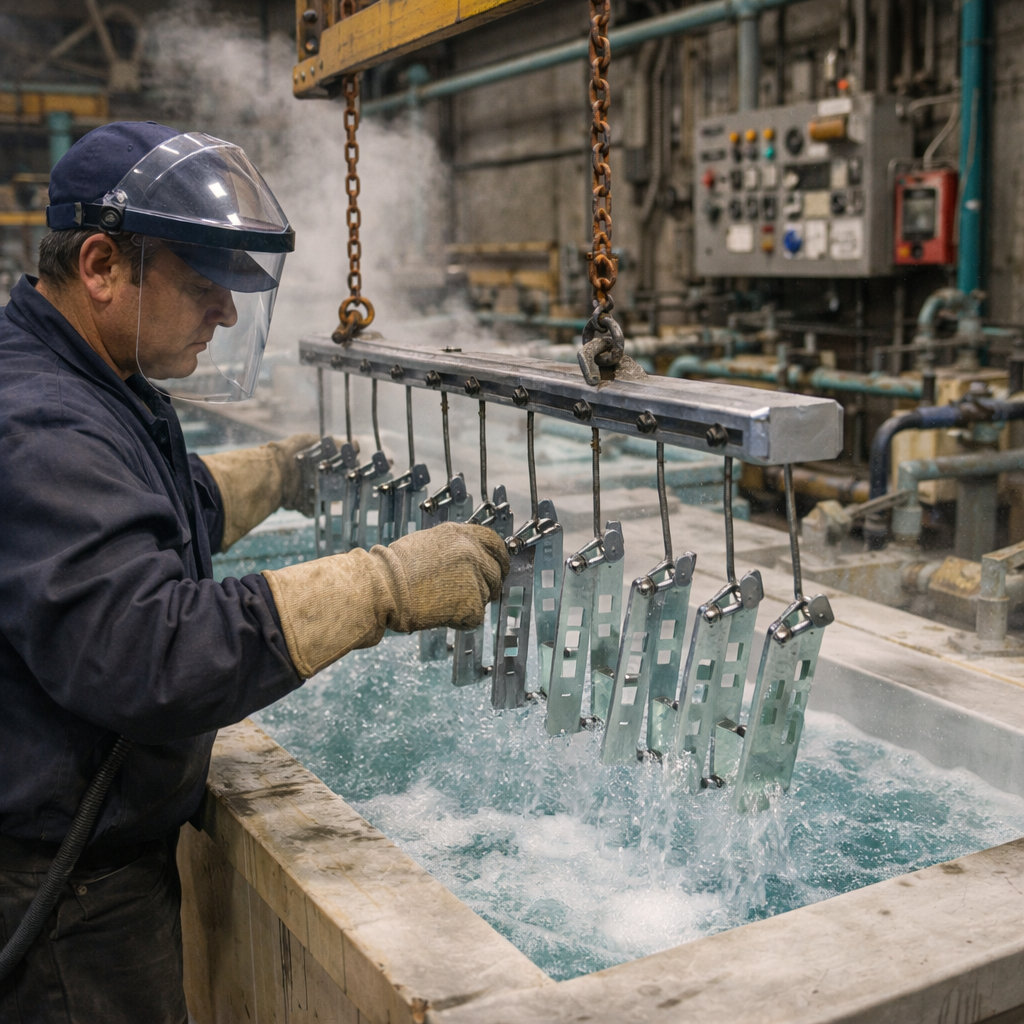
AI-generated illustration of our plating capability. Not a photograph of our facility or staff.
Plating
Plating is a metal finishing process used to apply a thin, controlled layer of metal onto the surface of fabricated components. This process enhances corrosion resistance, improves wear performance, and provides a consistent, professional appearance while maintaining precise part dimensions.
How It Works
The plating process begins with thorough surface preparation to remove oils, oxides, and contaminants. Parts are then placed into a chemical or electrochemical bath where the plating metal is deposited evenly onto the base material. Electrical current or controlled chemical reactions cause the plating material to bond to the surface, forming a uniform coating. Process parameters such as bath composition, temperature, and exposure time are carefully controlled to achieve the desired thickness and finish.
Quality & Accuracy
Plating delivers consistent coating thickness and reliable coverage, even on complex geometries. Careful monitoring and inspection ensure that plated parts meet dimensional, cosmetic, and performance specifications. The process maintains tight tolerances while enhancing surface properties such as hardness, conductivity, or corrosion resistance.
Benefits
Plating improves durability, extends service life, and enhances part performance in demanding environments. It can improve resistance to corrosion, wear, and chemical exposure while also providing decorative finishes when required. Suitable for steel, stainless steel, aluminum, and other metals, plating supports both functional and aesthetic requirements. This process delivers reliable, high-quality finishes that integrate seamlessly into metal fabrication workflows.